Your cart
There are no more items in your cart
Bacterial Endotoxin Test - LAL test
The bacterial endotoxin test or LAL test is performed to detect the presence of bacterial endotoxins in injectable pharmaceutical products, biological products, medical devices, dialysis waters, and other products administered intrathecally.
The bacterial endotoxin test is carried out with:
- Reagents and endotoxins for LAL test, traditional or recombinant
- Apyrogenic-certified consumables for LAL test, including water, glassware, and plastics
- Instrumentation for LAL test
Reagent LAL traditional
The name of the test comes from the Limulus Amebocyte Lysate (LAL), an extract obtained from the amebocytes of Limulus polyphemus. The lysate has the characteristic of reacting with endotoxins present in the membranes of Gram-negative bacteria (lipopolysaccharides), triggering an enzymatic cascade that leads to coagulation. It is precisely this property that is exploited to perform the LAL test.
The LAL test can be performed using qualitative or quantitative methods.
Recombinant reagent
The recombinant LAL reagent version represents a sustainable and innovative future for the bacterial endotoxin test.
It provides the same reliable results as the conventional LAL reagent without containing animal-derived components, utilizing the same enzymatic cascade and avoiding cross-reactivity with 1,3-β-D-glucans.
The recombinant test can be performed using a quantitative method.
Apyrogenic consumables for LAL test
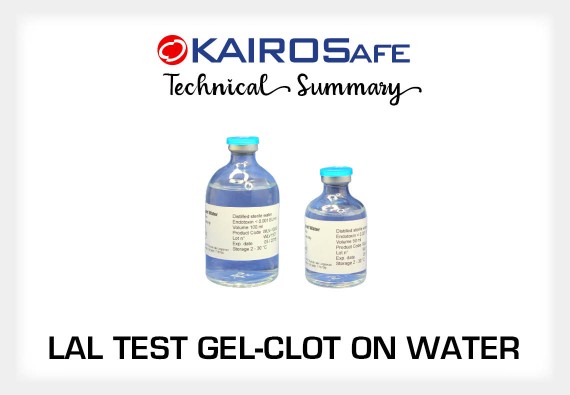
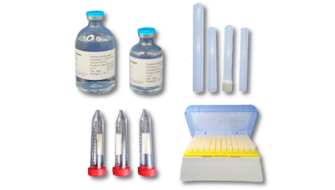
The bacterial endotoxin test must be performed with glassware, plastics, water, and, in general, consumables certified as apyrogenic and free from interferents. Successful testing requires accuracy and care to avoid contamination from unsuitable materials.
Instrumentation for LAL test
It is necessary to have a few dedicated instruments, preferably used only for the LAL test:
- vortex
- micropipettes and automatic dispenser
- digital thermometer
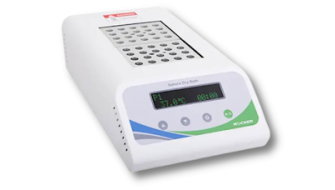
- for the gel-clot method, a dry incubator is required
- for kinetic methods, an optical reader incubator is required
Related posts