-
PRODUCTS
- Microbial strains
- Microorganisms cryo-preservation
- Dehydrated culture media
- Ready to use culture media
- Microbial identification
- Susceptibility discs
- Agri-food and environmental analysis
- Cleaning validation
-
Sterilization indicators
- Biological indicators
- Steam sterilization biological indicators
- Ehtylene Oxide sterilization biological indicators
- Hydrogen peroxide sterilization biological indicators
- Dry Heat sterilization biological indicators
- Irradiation sterilization biological indicators
- Chlorine dioxide sterilization biological indicators
- Formaldehyde sterilization biological indicators
- Culture broth for biological indicators
- Dry incubators for biological indicators
- Chemical and process indicators
- Steam sterilization chemical indicators
- Ehtylene Oxide sterilization chemical indicators
- Hydrogen peroxide and ozone sterilization chemical indicators
- Dry Heat and depyrogenation sterilization chemical indicators
- Irradiation sterilization chemical indicators
- Formaldehyde sterilization chemical indicators
- Sterilization pouches for Steam and EtO
- Biological indicators
- Bacterial Endotoxin Test
-
Filtration
Products for laboratory filtration
- Membranes for laboratory filtration
- Disposable sterile filter funnels
- Sterilizable filter funnels
- Single-place vacuum filtration systems
- Multi-place vacuum filter systems
- Vacuum pumps and laboratory pumps
- Gas burners and electric sterilizers
- Sterile and non-sterile disposable syringe filters
- Filter Vial system for the filtration of analytical samples
- Laboratory plasticware
- Laboratory instruments
- Offerte Promo
- CATALOGUES
- WHO WE ARE
- CUSTOMER CARE
- TECHNICAL GUIDES
- PROMO
Membranes for laboratory filtration
Microfiltration is a physical filtration method in which a fluid is passed through a membrane with a specific porosity, in order to separate microorganisms and suspended particles from the liquid, solvent, or gas being processed.
The membrane is placed on a rigid filtration support, which is positioned between the funnel into which the liquid to be filtered is poured and the filtration system, whether it is a filtration manifold or a single filtration unit.
Membrane materials
Membrane Solutions manufactures membrane filters in various materials, including:
- Cellulose esters
- Cellulose nitrate (CN)
- Cellulose acetate (CA)
- Mixed cellulose esters (MCE)
- Other materials:
- Nylon
- PTFE
- PES
- PVDF
- PP
Dimensions and porosity
The membrane diameter can be 13, 25, 47, 50, 90, 142, or 293 mm.
The typical pore size of membranes used for microfiltration is approximately 0.1 – 0.22 – 0.45 – 0.8 – 1 µm.
Sterility and color
Membranes can be sterile or non-sterile.
Most non-sterile membranes can be sterilized.
The color of the membranes is useful for highlighting retained particles or microorganisms; membranes can be white or black, plain or gridded.
Sterility and packaging
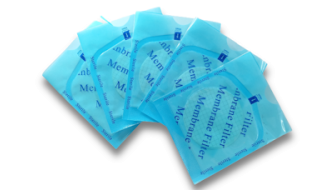
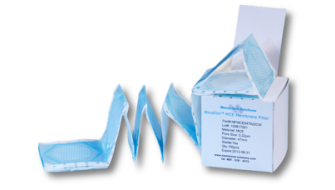
Sterile membranes, ideal for microbiological analysis and sterilization, are individually packaged in peel-pouch sachets, which can be:
- single
- joined in strips for automated dispensing with a dispenser
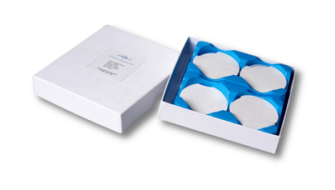
Non-sterile membranes for general and chemical use are packaged in stacks, in small boxes.

Applications
- Generic filtration
- Microbiological filtration
- Sterilization
- Sample preparation
- Environmental monitoring and analysis
- Filtration of aqueous and organic solutions
- Fluid monitoring
- Pharmaceutical product analysis
- Sample preparation for chromatography and mass spectrometry
- Gas ventilation and filtration
- Research applications
Related posts
-
Choosing Guide for Membrane filtersJanuary 30th 2024Posted in: Technical guidesQuick guide to choosing the filter membranes suitable for your useRead more