Your cart
There are no more items in your cart
Reagents and endotoxins for LAL test
The LAL test is performed using a combination of:
- LAL test reagent, traditional or recombinant
- Standard endotoxin (Control Standard Endotoxin, CSE, or Reference Standard Endotoxin, RSE)
In general, the LAL reagent is presented as a fine lyophilized powder, to be reconstituted with LAL water immediately before use. The reconstituted lysate is mixed with the samples and the standard endotoxin controls according to the protocols of the chosen method.
Traditional LAL Reagent
The Limulus Amebocyte Lysate (LAL) reacts with endotoxins present in the membranes of Gram-negative bacteria, triggering an enzymatic cascade that leads to coagulation.
Using the LAL reagent, the test can be performed with the gel-clot, kinetic-turbidimetric, or kinetic-chromogenic methods.
Recombinant Reagent
The recombinant LAL reagent represents a sustainable and innovative future for the bacterial endotoxin test.
It provides the same reliable results as the conventional LAL reagent without containing animal-derived components, utilizing the same enzymatic cascade and avoiding cross-reactivity with 1,3-β-D-glucans.
The recombinant test is a quantitative kinetic-chromogenic method.
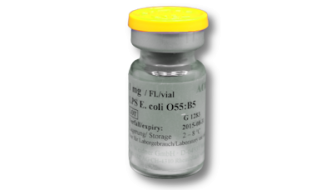
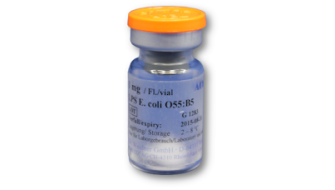
Control (CSE) and Reference (RSE) Endotoxin
The LAL test must always be performed using the LAL reagent together with a purified endotoxin, either the Control Standard Endotoxin (CSE) produced by the same manufacturer as the LAL reagent, or the Reference Standard Endotoxin (RSE or BRP) produced by USP and EP, respectively.
Endotoxins are used to prepare positive controls and standard curves. RSE and BRP are independent of the lysate lot, while the CSE is paired with the lysate via a lot-specific certificate.
Related posts