
Your cart
There are no more items in your cart
Search in blog

The bioluminometer is a small, portable device that determines the cleanliness level of surfaces in real time by detecting organic matter, an indicator of hygiene. The sample is collected by swabbing the surface with a specific swab and inserting it into the device, which then takes the reading.
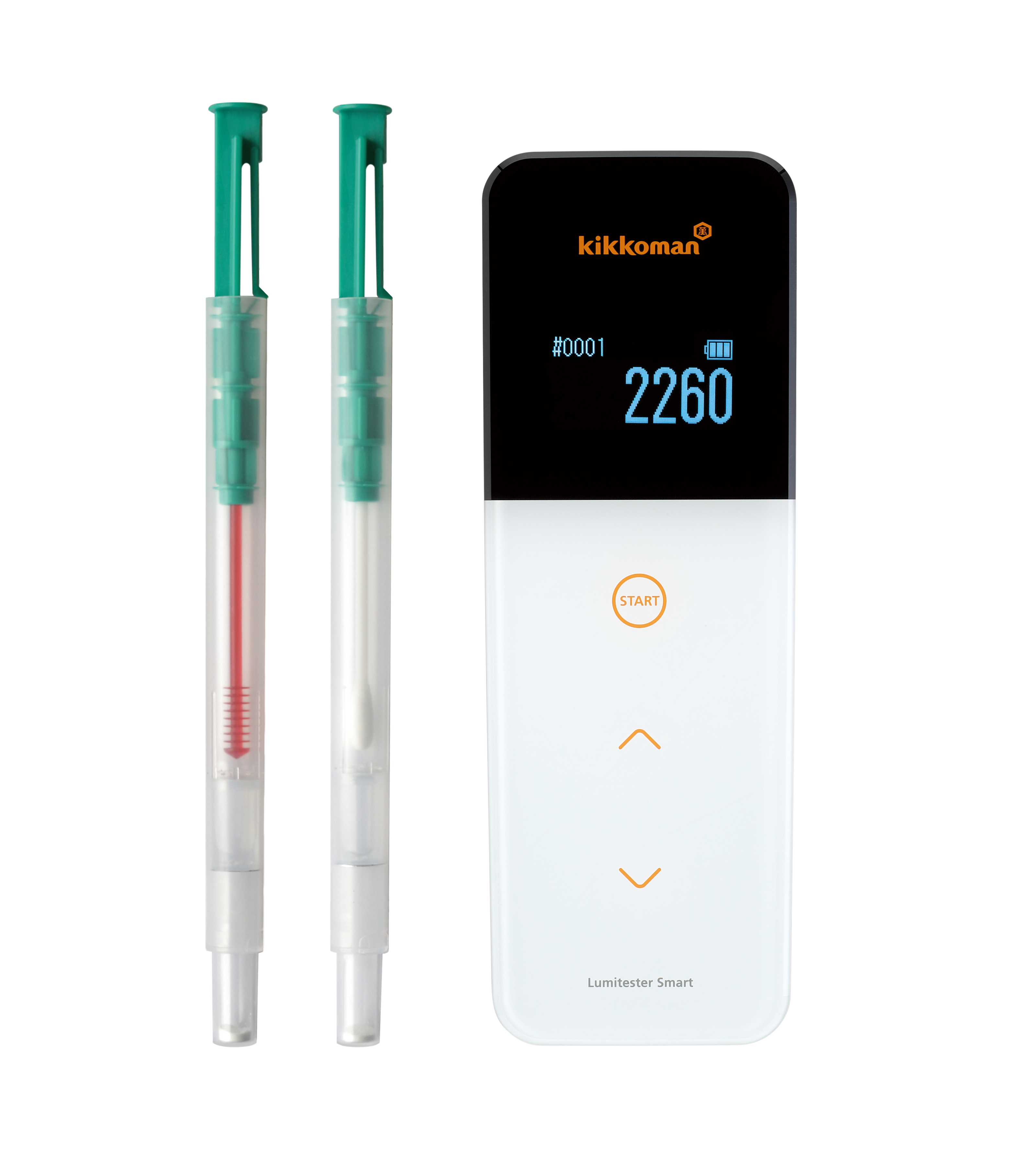
It should be clarified at the outset that bioluminometers do not provide a direct measurement of bacterial or viral load; instead, they detect the presence of organic material by measuring ATP—as is the case with most bioluminometers—or ATP, ADP, and AMP, as with the Lumitester Smart.
For several years, Kairosafe has distributed the Lumitester Smart bioluminometer, manufactured by the Japanese company Kikkoman, which utilizes unique, innovative technology to deliver reliable, robust results, even in the most sensitive applications. We recommend this instrument for various reasons, including its ease of use, portability, and, above all, its ability to minimize false negatives.
The Lumitester Smart is used in conjunction with Lucipac A3 swabs to collect samples from the surface being tested. Following the near-instantaneous reading of the swab, results are displayed on the Lumitester screen and stored in a cloud archive, which can be accessed at any time for continuous data monitoring. Results are transferred via Bluetooth to smartphones, tablets, and other devices.
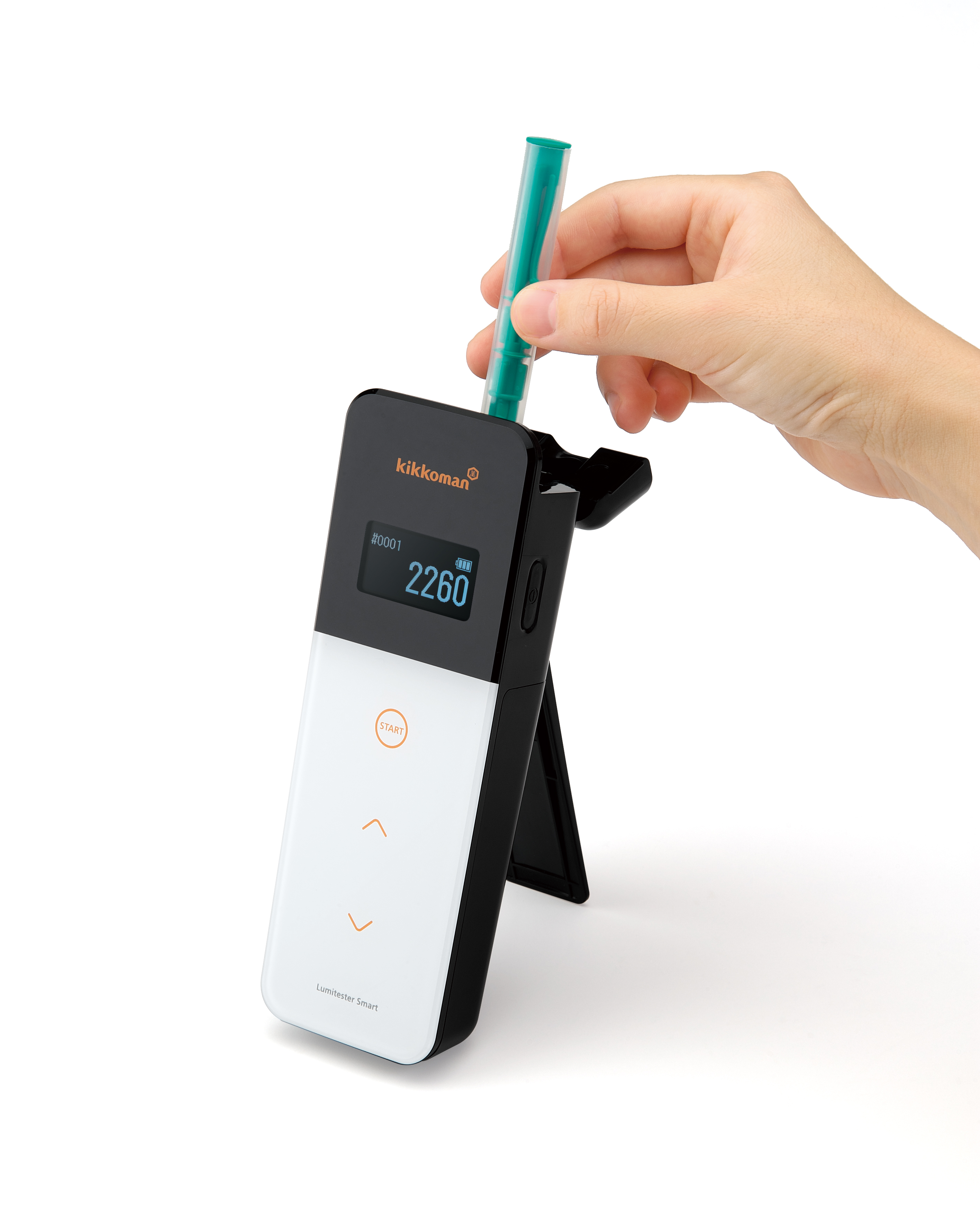
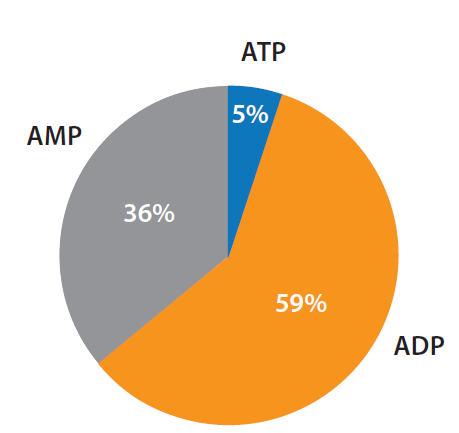
As previously mentioned, the Lumitester Smart detects the presence of organic material by measuring ATP, ADP, and AMP (A3). This trio of A3 molecules reacts with the reagent on the sampling swab, triggering a bioluminescence reaction. The intensity of the light signal is directly proportional to the A3 concentration in the sample and is measured by the instrument, which converts it into a numerical RLU (Relative Light Unit) value displayed on the screen. ATP (adenosine triphosphate) is a molecule involved in the metabolism of all living organisms; consequently, its presence on surfaces is considered an indicator of poor hygiene. It is a relatively unstable molecule when subjected to thermal, chemical, or enzymatic treatment. Its degradation yields simpler derivatives such as ADP (adenosine diphosphate) and AMP (adenosine monophosphate).
The use of conventional ATP tests for surface monitoring has a limitation: the ATP contained in organic residues, such as those from food or handling, can rapidly degrade into ADP and AMP, leaving a signal that conventional ATP tests cannot detect. In fact, ADP and AMP are abundant in many organic residues following ATP degradation, potentially leaving little to no detectable ATP. When comparing the ability of the A3 test and standard ATP tests to detect adenylates in various matrices, the A3 test demonstrated a significantly higher signal intensity than any of the other ATP test kits, indicating that A3 technology reduces false negatives.
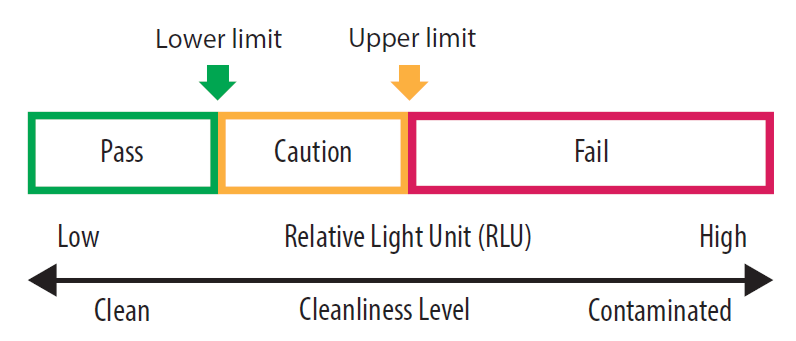
RLUs are not a standard unit of measurement like the meter; indeed, each manufacturer establishes its own ratio between light intensity (expressed in RLUs) and the detected quantity of pure ATP (expressed in femtomoles), based on reagent formulations and light detection systems.
Pass/fail acceptance limits are RLU values used as criteria to assess cleanliness levels and determine necessary actions. These limits are selected based on specific requirements or manufacturer recommendations.
Limits determining the required course of action are established based on data collected during on-site validation testing:
The Lumitester Smart can be used to monitor sanitation across all sectors—such as pharmaceutical, food, healthcare, HoReCa, and industrial—enabling a comparison of hygiene levels before and after cleaning procedures. It requires no specialized training and is highly valued by operators for its rapid results (10 seconds).
Swabs are also available for analyzing water and liquids in general. The LuciPac A3 Water swab is used by immersing its tip in the liquid being tested, then proceeding as described above. Endoscopes: For sampling endoscopes in a clinical setting, the LuciSwab is used; this is a special, long, flexible swab designed for insertion into endoscopes.
What does the bioluminometer detect?
It detects ATP (and its derivatives, in the case of the Lumitester Smart), which indicates the presence of organic matter—and therefore organic soil. Where organic soil is present, there may be various types of organic substances, such as biofilms, bacteria, allergens, etc.
Why purchase the Lumitester Smart?
The Lumitester allows you to assess the cleanliness level of a surface (as well as liquids and endoscopes) in just a few seconds, right on-site.
Does it require specific training?
Minimal training is required because the device is very simple to use. However, it is necessary to establish a usage procedure so that the operator can perform the task routinely and with the appropriate precautions. This guide aims to explain in detail how the bioluminometer works and how to use it correctly.